

Introduction
Haryana is quietly becoming one of India’s most exciting solar energy hotspots. If you’re exploring a solar panel big project in Haryana, you’ve chosen the right state at the right time. The Haryana government has set an ambitious target of 6,000 MW of solar capacity by 2030 — up from just 265 MW a few years ago. That’s a 22x increase, and it’s already happening right now.
Whether you’re a farmer, a business owner, an industrial unit, or a developer, large-scale solar projects in Haryana offer a once-in-a-generation investment opportunity. With more than 330 sunny days per year, strong government backing, and net metering policies in place, Haryana’s solar future is bright.
At A1 Green Powers, we specialize in designing, supplying, and commissioning solar panel projects of all sizes across Haryana and North India. In this guide, we’ll walk you through everything — from government policies and MW-scale opportunities to ROI timelines and installation steps.
Let’s dive in.
Section 1: Why Haryana Is the Ideal State for Big Solar Panel Projects
Haryana’s Solar Potential Is Exceptional
Haryana receives approximately 330 sunny days per year. This gives the state one of the highest solar irradiance levels in North India. For any solar panel big project in Haryana, this means higher energy yield, faster payback periods, and stronger long-term returns.
The state’s flat terrain is also ideal for ground-mounted solar farms. Districts like Mahendragarh, Hisar, Rewari, and Fatehabad have large tracts of land well-suited for utility-scale projects.
The Government Is Actively Pushing Solar Adoption
Haryana’s Department of New and Renewable Energy (DNRE) and its nodal agency, HAREDA (Haryana Renewable Energy Development Agency), have rolled out multiple large-scale schemes. These include:
- GCRT Solar Power Plants with and without battery storage
- Off-grid solar power plants from 1 kW to 3 kW for rural areas
- Solar High Mast Lighting Systems for public spaces
- MW-scale solar tenders through DHBVNL and UHBVNL
HAREDA regularly issues tenders inviting developers to set up solar power plants of up to 2 MW capacity near identified substations. These come with 25-year government-backed Power Purchase Agreements (PPAs) at fixed rates — making them extremely attractive for long-term investors.
Rising Electricity Tariffs Make Solar a Financial Necessity
HERC (Haryana Electricity Regulatory Commission) periodically increases electricity tariffs. Industrial and commercial consumers in Haryana now pay up to ₹7.10 per unit for grid power. Solar energy, once installed, effectively locks in your fuel cost at near zero for 25 years.
For large industries and institutions, this means cumulative savings of several crore rupees over the project lifetime.
Section 2: Types of Solar Panel Big Projects in Haryana
Ground-Mounted Utility-Scale Solar Farms
Ground-mounted solar farms are the most common format for large-scale solar projects in Haryana. The state’s plan includes 3,200 MW of ground-mounted installations as part of its 6,000 MW target.
Who Can Set Up Ground-Mounted Projects?
- Individual landowners or farmers leasing land to developers
- Private companies participating in HAREDA tenders
- Industrial groups seeking captive power generation
- Real estate developers with large open areas
For a 1 MW solar power plant, you typically need around 4–5 acres of shadow-free land. The government has reserved land near identified substations for this purpose, and eligible applicants can participate through Haryana’s e-Procurement portal.
Industrial and Commercial Rooftop Solar Projects
Commercial and industrial rooftop solar is another major segment. A 500 kW rooftop solar plant is one of the most profitable investments for large factories, warehouses, and institutional buildings in Haryana. Such a system requires approximately 40,000–45,000 sq. ft. of roof area.
Key Benefits for C&I Solar Projects:
- Net metering up to 500 kW under HERC regulations
- Accelerated depreciation of 40% under the Income Tax Act
- GST input credit on system components
- Exemption from electricity duty and wheeling charges for captive use
Solar Irrigation Projects for Agriculture
Haryana’s Department of New and Renewable Energy offers a 75% subsidy to farmers for installing solar water pumps from 3 HP to 10 HP. Of this, 30% comes from the Central Financial Assistance (CFA) and 45% from the Haryana state government.
This initiative is transforming agriculture in the state, reducing dependence on diesel-powered pumps and cutting irrigation costs dramatically.
Section 3: Government Schemes Supporting Solar Panel Big Projects in Haryana
PM Surya Ghar Muft Bijli Yojana
The central government’s flagship scheme — PM Surya Ghar Muft Bijli Yojana — is currently the primary subsidy mechanism for residential solar in Haryana. Under this scheme:
- Systems above 3 kW receive a fixed subsidy of ₹78,000
- Subsidies are credited directly to bank accounts within 30–45 days post-commissioning
- Both DHBVN and UHBVN jurisdictions are covered
For homeowners in Gurgaon and Faridabad, this scheme is especially popular. Solar adoption in these cities is among the highest in India, and local DISCOM officials are well-versed with net metering protocols.
Haryana Solar Policy 2023
The Haryana Solar Policy 2023 provides the overarching framework for large-scale solar development. Key provisions include:
- Target of 6 GW cumulative solar capacity by 2030
- No stamp duty on solar project land transactions
- Permission for solar parks on water bodies (floating solar)
- 20% allocation of ground solar capacity for smaller developers
- Renewable Purchase Obligation (RPO) of 43.33% to be met by 2028–29
Net Metering Policy in Haryana
Net metering is a game-changer for solar panel big projects in Haryana. Under Haryana’s net metering policy, excess energy exported to the grid is credited on monthly bills. If surplus units remain in April (the annual reset month), DISCOMs pay the APPC (Average Power Purchase Cost) rate for them.
This makes proper system sizing critical. A well-designed system avoids over-generation while maximizing bill savings.
HAREDA Tenders for MW-Scale Projects
HAREDA regularly floats tenders for MW-scale solar projects. The DHBVN has invited applications for solar power plants up to 2 MW within a 5 km radius of designated substations. Key tender details include:
- Participation via Haryana Government e-Procurement portal
- Eligibility for individuals, farmer organizations, or developer companies
- Land leasing allowed for 25-year terms
- Fixed power purchase rate of ₹3.11 per unit with reverse bidding mechanism
- 8 months to complete installation post-award
Section 4: Return on Investment for Big Solar Projects in Haryana
Financial Model for a 500 kW Industrial Solar Plant
A 500 kW solar power plant in Haryana is one of the most profitable renewable energy investments in 2026. Here’s a simplified financial snapshot:
| Parameter | Estimate |
|---|---|
| System Capacity | 500 kW |
| Annual Generation | ~7,00,000 – 7,50,000 units |
| Grid Tariff Saved | ₹7.10/unit (industrial) |
| Annual Savings | ₹49–53 lakh |
| Approx. Project Cost | ₹2.2–2.5 crore |
| Payback Period | 4–5 years |
| Project Lifetime | 25 years |
| Net Savings (lifetime) | ₹10–12 crore+ |
Note: Figures are illustrative and vary based on site conditions, tariff category, and system design. Contact A1 Green Powers for a customized proposal.
Financial Model for a 1 MW Ground-Mounted Solar Farm
For investors participating in HAREDA tenders:
- Annual generation: ~14–15 lakh units
- Revenue at ₹3.11/unit: ~₹44–47 lakh per year
- Guaranteed over: 25 years
- Approximate project cost: ₹4–4.5 crore
- Payback period: 8–10 years
- Total guaranteed revenue: ₹11–12 crore
The government-backed PPA eliminates off-take risk — making this one of the safest long-term investments available in Haryana today.
Tax Benefits That Accelerate ROI
Accelerated Depreciation (AD): Companies can claim 40% depreciation in the first year of installation. For a ₹2.5 crore system, this translates to a tax saving of approximately ₹35–40 lakh in Year 1 alone (at 30% corporate tax rate).
GST Input Credit: Businesses registered under GST can claim input tax credit on solar system purchases, further reducing the effective project cost.
Together, these benefits can reduce payback periods by 1–2 years compared to standard calculations.
Section 5: How A1 Green Powers Executes Solar Panel Big Projects in Haryana
End-to-End EPC Services
At A1 Green Powers (a1greenpowers.com), we deliver complete Engineering, Procurement, and Construction (EPC) services for solar projects across Haryana. Our team handles every stage — from initial site assessment and system design to installation, grid interconnection, and after-sales maintenance.
We serve:
- Industrial units in Manesar, Bahadurgarh, Kundli, and Faridabad
- Commercial buildings in Gurgaon, Rohtak, and Hisar
- Agricultural consumers across rural Haryana
- Government institutions and municipalities
Our Project Execution Process
Step 1 — Site Assessment and Feasibility Study
Our engineers conduct a thorough shadow analysis, roof/land evaluation, and load profile study. We assess energy requirements, grid connectivity, and available government subsidies.
Step 2 — System Design and Engineering
We design a system tailored to your consumption patterns. This includes panel layout, inverter sizing, cable routing, and mounting structure engineering — all optimized for maximum energy yield.
Step 3 — Procurement of Quality Components
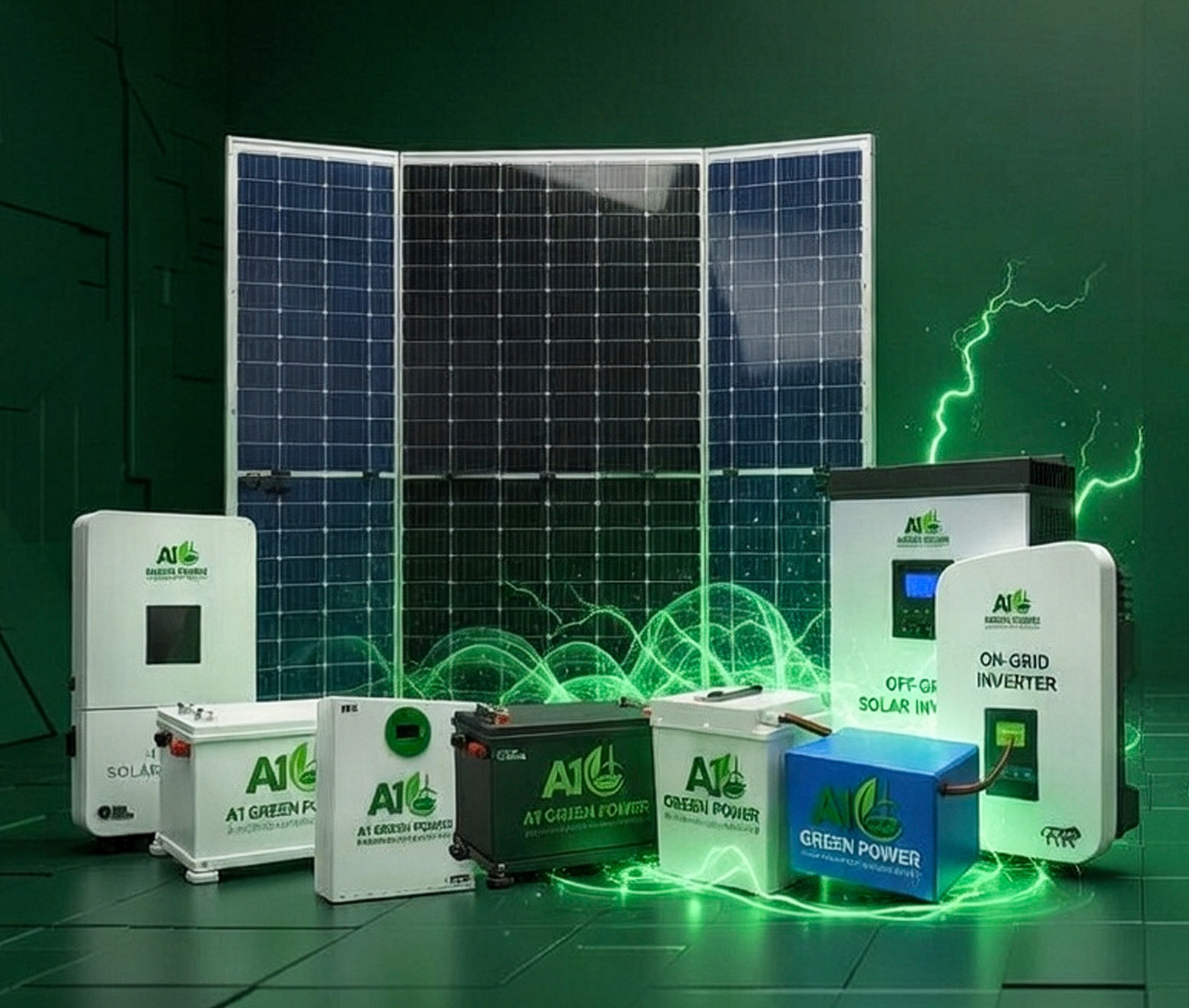
We source Tier-1 solar panels and certified inverters to ensure 25-year performance. All equipment meets MNRE and BIS specifications.
Step 4 — Installation and Commissioning
Our certified installation teams complete projects within agreed timelines. We handle all DISCOM paperwork, net meter applications, and commissioning certificates.
Step 5 — O&M and Monitoring
Post-installation, we offer Annual Maintenance Contracts (AMC) with remote monitoring, performance reporting, and preventive maintenance. We ensure your system delivers peak output year-round.
Why Clients Choose A1 Green Powers
- Deep local expertise across Haryana’s DHBVN and UHBVN territories
- HAREDA-empaneled company with government project credentials
- Transparent pricing with no hidden charges
- Strong after-sales support and dedicated project managers
- Financing assistance through empaneled banks and NBFCs
Conclusion
Haryana’s solar energy landscape is transforming rapidly. With a 6,000 MW target by 2030, generous government schemes, guaranteed PPAs, and rising electricity tariffs — there has never been a better time to invest in a solar panel big project in Haryana.
Whether you’re looking to set up a 1 MW ground-mounted solar farm, a 500 kW industrial rooftop system, or a solar irrigation pump — the opportunity is real, the savings are measurable, and the technology is proven.
A1 Green Powers is your trusted partner for making this transition. Our end-to-end EPC capabilities, deep knowledge of Haryana’s solar policies, and commitment to quality make us the ideal choice for your next solar project.
📞 Ready to start your solar journey?
👉 Get a Free Site Assessment from A1 Green Powers Today
Let our experts design the perfect solar solution for your home, business, or farm — and start saving from Day 1.
Frequently Asked Questions (FAQ)
Q1. What is the minimum size for a “big” solar project in Haryana?
A: In industry terms, any solar installation above 100 kW is typically considered a large-scale or commercial project. However, utility-scale big projects usually start from 500 kW to 1 MW and above. HAREDA tenders in Haryana are typically for projects up to 2 MW per substation zone.
Q2. What government subsidies are available for large solar projects in Haryana?
A: For residential systems above 3 kW, the PM Surya Ghar Yojana provides ₹78,000 in central subsidy. For farmers, DNRE provides a 75% subsidy on solar pumps. For commercial and industrial projects above 100 kW, direct subsidies are limited — but companies benefit significantly through 40% accelerated depreciation and GST input credit.
Q3. How much land is required for a 1 MW solar project in Haryana?
A: A 1 MW ground-mounted solar power plant requires approximately 4–5 acres of shadow-free land, ideally located within 5 km of a HAREDA-identified substation for grid interconnection.
Q4. How long does it take to set up a big solar project in Haryana?
A: For commercial/industrial rooftop projects (100 kW – 500 kW), installation typically takes 4–8 weeks. For ground-mounted MW-scale projects under HAREDA tenders, the completion deadline is typically 8 months from the award date.
Q5. What is the payback period for a 500 kW solar project in Haryana?
A: Based on current electricity tariffs and system costs, a 500 kW industrial solar system in Haryana has a payback period of approximately 4–5 years. With accelerated depreciation benefits, this can reduce to 3–4 years for corporate taxpayers.
Q6. Can farmers participate in solar panel big projects in Haryana?
A: Yes. Farmers can participate both as landowners (by leasing land to solar developers for 25 years) and as direct beneficiaries through the 75% subsidized solar pump scheme. Farmers who surrender their electric pump connections are given priority.
Q7. Is net metering available for large solar installations in Haryana?
A: Yes. HERC regulations allow net metering up to 500 kW for commercial and industrial consumers under HAREDA and DISCOM guidelines. Group Housing Societies and Resident Welfare Associations (RWAs) can also install shared solar plants with net metering benefits.
Q8. How do I start a solar project with A1 Green Powers?
A: Simply visit a1greenpowers.com or call our team to schedule a free site assessment. Our experts will evaluate your property, consumption profile, and eligibility for government schemes — and provide a detailed proposal with ROI projections.
Q9. What is HAREDA and what role does it play in big solar projects?
A: HAREDA — the Haryana Renewable Energy Development Agency — is the state’s nodal agency for renewable energy. It issues tenders, empanels solar vendors, regulates net metering, oversees subsidy disbursement, and coordinates with central agencies like MNRE and SECI for large-scale solar development in Haryana.
Q10. Are big solar projects in Haryana eligible for carbon credits?
A: Large solar projects displacing fossil fuels may be eligible for Renewable Energy Certificates (RECs) and, under certain frameworks, carbon credit mechanisms. Companies with sustainability mandates or ESG commitments can explore these additional revenue streams. A1 Green Powers can guide you through the eligibility assessment.





Leave A Comment