

Introduction
Three years ago, I did something I probably should’ve done sooner—I installed solar panels on my roof. Like most people, I started by Googling “solar panel manufacturer India” at midnight, feeling overwhelmed by the options. There were brands I’d never heard of, prices that seemed way too cheap, and promises that sounded almost too good to be true.
I didn’t know then that choosing the right solar panel manufacturer would be one of the best decisions I’d make for my home. Looking back, I wish I’d known what I know now about solar panels in India.
Here’s the thing about the solar industry in India right now—it’s booming. Everyone’s talking about going solar. But not everyone’s talking about what actually separates a decent solar panel from a great one. When you’re comparing solar panel manufacturers, you’re basically looking at high efficiency solar panel India options, trying to understand solar panel price in India, and hoping you’re getting the best solar panel in India for your money. It’s confusing, especially when you’re also seeing Made in India solar panels competing with imported ones, and you’ve got solar module manufacturer Haryana options to consider too.
I’ve spent the last few years learning about this stuff—partly because I had to, partly because I got genuinely curious about how it all works. So I figured I’d share what I’ve picked up. Maybe it’ll help you avoid some of the mistakes I almost made.
Why I Actually Care About Which Solar Panel Manufacturer Makes Your Panels
Here’s what most people don’t understand until they’ve been living with solar panels for a while: the manufacturer matters way more than you’d think.
When I was shopping around, I went to a few different showrooms. One sales guy tried to convince me that all solar panels are basically the same. He said it didn’t really matter which company made them—they all turn sunlight into electricity, right? I remember thinking that sounded wrong, but I couldn’t exactly explain why at the time.
The truth is, there’s actually a massive difference between panels. And it shows up in ways you don’t notice until years down the line.
The Real Difference Between Solar Panel Manufacturers
Think of it like buying a car. Sure, every car gets you from point A to point B. But you’re not paying for just the transportation—you’re paying for reliability, resale value, how long it lasts, and how much you enjoy driving it.
Solar panels work the same way. A cheap solar panel might generate decent power for five years. Then the efficiency starts dropping faster than you’d expect. You’re losing output, which means you’re losing savings. Meanwhile, a quality panel from a reputable solar panel manufacturer India still performs at 95% capacity after a decade.
When I finally sat down with someone from A1 Green Powers, they explained something that stuck with me: “Your solar investment is a 25-year commitment. Saving ₹5,000 upfront by choosing cheaper panels might cost you ₹50,000 in lost production over that time.”
That made the difference between a good solar panel price in India and a sustainable one actually make sense.
What Actually Happens Inside a Manufacturing Facility
I got curious enough to visit a manufacturing facility once. I’ll be honest—I expected it to be boring. It wasn’t.
Watching the precision that goes into making panels was eye-opening. The cells get tested individually. Then the modules get stress-tested. They simulate what happens when panels sit through monsoons, scorching summer heat, and harsh winters. They test for salt corrosion if you’re near the coast. They check how panels perform in low-light conditions because, let’s face it, India gets cloudy days too.
When you’re looking at a high efficiency solar panel India from a serious manufacturer, you’re looking at something that’s been through a lot before it even gets installed on your roof. That testing, that quality control—that’s what separates best solar panel in India from the okay ones.
The Price Question: Why Cheap Isn’t Always Smart
Let me be straight with you—I almost bought the cheapest option available. The price difference was significant enough that I seriously considered it.
I remember sitting with my dad, showing him quotes. One was about 20% cheaper than the others. He asked me a simple question: “Why is it cheaper?” I didn’t have a good answer. So I started digging.
Turns out, there were several reasons. The cheaper panels used lower-grade silicon. The manufacturing process had fewer quality checks. The warranty was shorter. And honestly, the company had been around for maybe three years. Compare that to established solar panel manufacturers who’ve been doing this for decades.
Understanding Solar Panel Price in India (Without Getting Swindled)
Here’s what I learned about pricing. It’s not actually as random as it seems.
Quality solar panels in India usually cost between ₹20,000 to ₹35,000 per kilowatt. That’s for high-efficiency options from reputable manufacturers. Cheaper panels sit around ₹15,000 to ₹20,000 per kilowatt. Imported premium panels go higher, sometimes ₹40,000+ per kilowatt.
But here’s what matters: a ₹25,000 per kilowatt panel that lasts 25 years and maintains 90% efficiency is worth more than a ₹15,000 panel that drops to 70% efficiency in year ten. Do the math on your electricity generation, not just the upfront cost.
The solar panel price in India you’ll see quoted depends on several things. Panel efficiency matters—22% efficient panels cost more than 18% efficient ones. Brand reputation affects pricing. Manufacturing location makes a difference too. A Made in India solar panel often costs less than imported alternatives, partly because transportation costs are lower, partly because of government incentives for domestic manufacturing.
When A1 Green Powers quotes you a price, it reflects actual costs—premium materials, testing, warranty, and customer service. It’s not a discount operation. It’s positioned where quality and affordability meet.
Why Government Subsidies Matter (And How to Actually Get Them)
I almost missed out on subsidies because I didn’t know what I was doing. I’m not alone—most people don’t realize there’s money available.
Different states offer different benefits. Some give direct subsidies. Others offer loans at favorable rates. A few states let you sell excess power back to the grid at decent rates. The central government’s Solar Subsidy Scheme covers residential installations.
When I finally got the paperwork sorted, I ended up with about ₹1.5 lakhs in subsidy benefits. That brought my cost down significantly. The thing is, you have to work with manufacturers who understand the subsidy process. They know which paperwork matters, which certifications you need, and how to navigate the system.
This is where dealing with an established solar panel manufacturer in India becomes practical. They’ve done this hundreds of times. They know the process inside out.
High Efficiency Solar Panel India: What That Actually Means
For the longest time, I didn’t really understand what “efficiency” meant. I thought it was just marketing speak.
Then someone explained it in a way that made sense: efficiency is what percentage of sunlight actually becomes electricity.
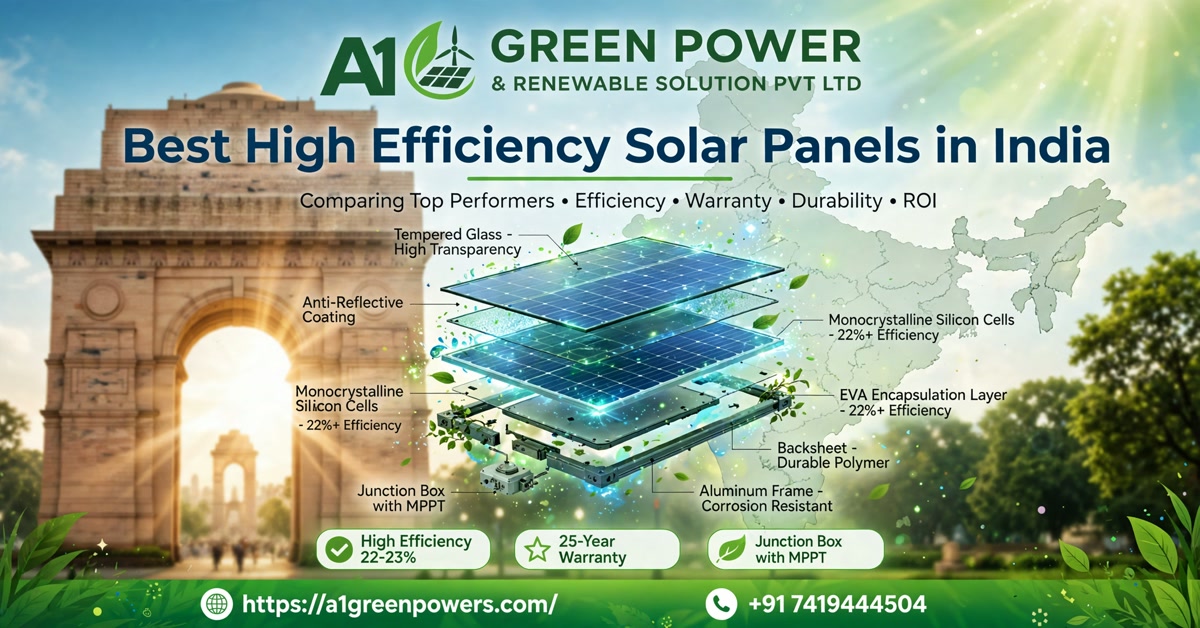
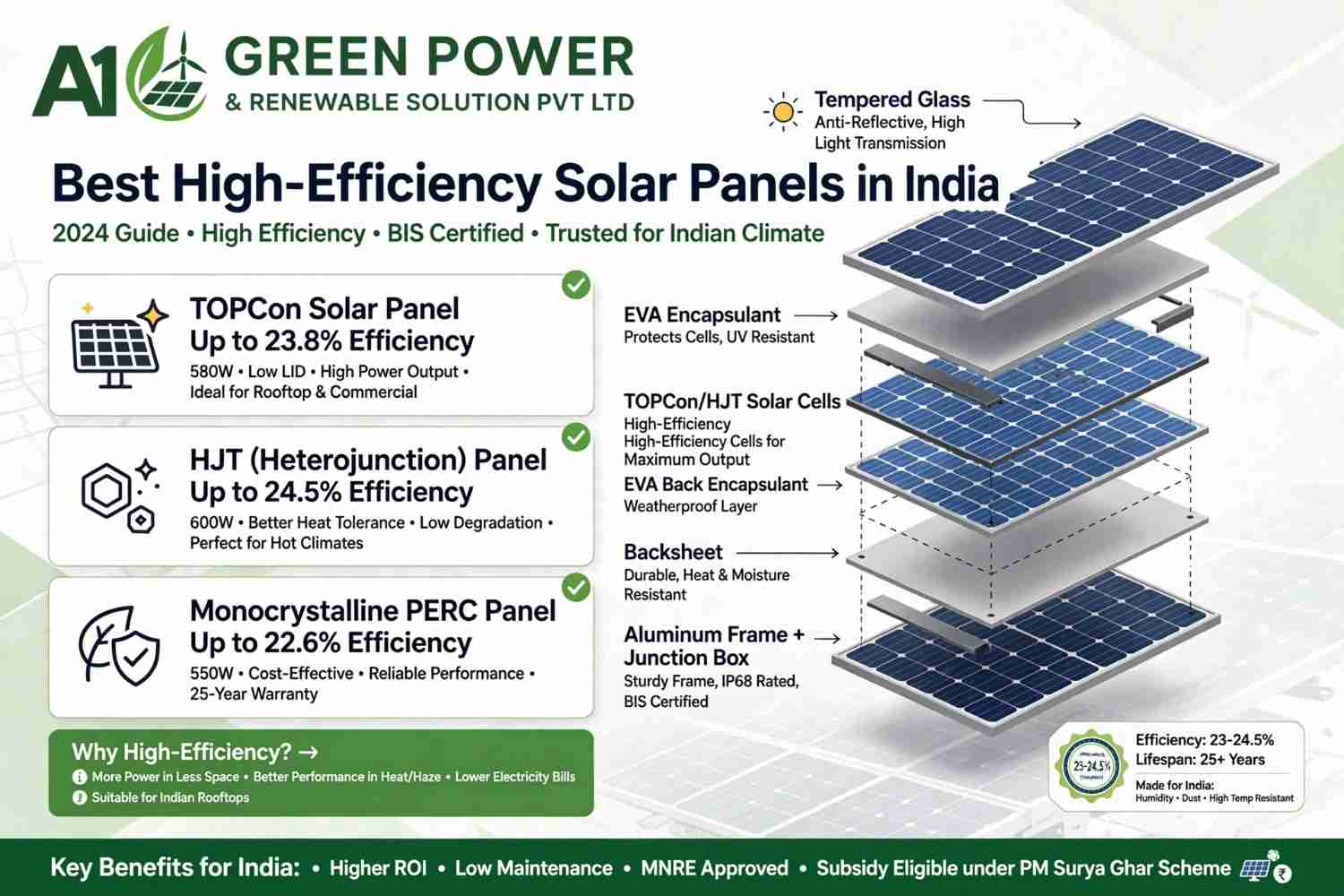
Sunlight hits a panel. Some gets reflected. Some gets absorbed as heat. Only a portion converts to electricity. That portion is the efficiency rating. Currently, the best solar panel in India achieves around 22% efficiency. Most quality panels sit between 18-21%. Older or cheaper panels might be 16-17%.
Why does this matter? If you have a small roof, high efficiency solar panel India options are essential. You need maximum output from limited space. If you have a larger property, standard 18% efficiency panels work fine and save you money.
The Efficiency Conversation I Wish I’d Had Earlier
When I was deciding between panels, I focused too much on the efficiency number. I thought going from 18% to 22% was a huge upgrade. My installer sat me down and did the math.
For my roof size and sun exposure, the difference was about ₹2,500 more per kilowatt installed capacity. That meant ₹25,000 extra for a 10 kW system. The additional electricity generation over 25 years came to about ₹35,000 in savings. So it made sense financially.
But here’s the thing—it doesn’t make sense for everyone. Smaller residential systems might not justify premium efficiency. Larger commercial installations usually do. A good manufacturer helps you figure out what actually works for your situation instead of upselling you on specs you don’t need.
Manufacturing Standards and Why They Matter
This is where things get technical, but I’ll keep it simple because I had to learn it the hard way.
Reputable solar panel manufacturers follow international standards. There’s testing for temperature cycling—simulating years of thermal stress in weeks. There’s humidity-freeze testing because India’s monsoons are rough on equipment. There’s salt-mist testing for coastal installations. These aren’t optional. They’re how you know a panel will actually last.
When you see a manufacturer advertising certifications like IEC 61215 or IEC 61730, those are real. They mean the panels have passed independent testing. That’s different from a company just saying “our panels are great quality.”
A1 Green Powers manufactures in Haryana, which has become a manufacturing hub. Their facility maintains these standards. Every Made in India solar panel that leaves their facility has been through the testing gauntlet. It’s not cutting corners because cutting corners means failures showing up in five or six years. That’s bad for business and bad for customers.
Why Solar Module Manufacturer Location Actually Affects Quality
I didn’t think location mattered much until I understood the logistics.
Manufacturing in Haryana means better access to raw materials. It means proximity to testing facilities and quality assurance labs. It means faster delivery times and better after-sales service. A solar module manufacturer Haryana based operation can support customers across northern India more efficiently.
The Advantage of Dealing With Local Manufacturers
Here’s something that surprised me: buying from a local solar panel manufacturer India instead of an international brand actually has real advantages.
Service response times are faster. If something goes wrong, someone can reach you quickly. Warranty claims are simpler because you’re not dealing with international logistics. If you need a replacement or repair, it happens in weeks, not months.
The technology isn’t outdated either. Modern Indian manufacturers are using the same advanced technology as international brands. The difference is they’re doing it at better prices because they have lower overhead.
Supporting Made in India solar panels also means supporting local jobs and the national renewable energy mission. There’s something satisfying about that, honestly. You’re not just saving on your electricity bill; you’re contributing to India’s transition away from fossil fuels.
The Warranty Conversation Nobody Wants to Have But Everyone Should
I glossed over warranties when I was shopping. That was dumb. Warranties matter more than I realized.
There are basically two warranties on solar panels. The material warranty covers manufacturing defects. This is usually 10 years. The performance warranty guarantees the panel will produce a certain percentage of rated output. This is usually 25 years, guaranteeing that panels still produce at least 80% of rated capacity after 25 years.
A quality solar panel manufacturer backs both warranties confidently. If they’re hedging on warranties or offering shorter protection periods, that’s a red flag. It suggests they’re not confident in their product longevity.
Why 25-Year Warranties Make Financial Sense
When I looked at warranty terms across different manufacturers, the ones offering 25 years were more expensive upfront. But think about it logically: they’re willing to guarantee their product for a quarter-century. That’s confidence. That’s also risk assessment—they’ve done the math and they know their panels will last.
Cheaper manufacturers often offer 10-12 year warranties. This isn’t always a bad thing, but it tells you something about the manufacturer’s expectations for their product lifespan.
I went with a 25-year warranty from a manufacturer with a track record. When I checked A1 Green Powers’ warranty terms, they matched this standard. That consistency across products signals manufacturer confidence.
Making the Decision: How I Finally Chose My Solar Panel
By the time I was ready to decide, I’d visited multiple showrooms, talked to installers, read forums, and basically exhausted myself researching.
Here’s how I finally narrowed it down: I identified the best solar panel in India for my specific needs, not the “best” in general terms. Those are different things.
For my situation—a moderate-sized roof, decent sun exposure, medium budget—I needed efficient but not premium panels, competitive pricing, solid warranty, and good local support. A1 Green Powers ticked all these boxes.
The Questions I Asked Before Deciding
I recommend asking these questions before committing to any solar panel manufacturer:
First, how long have you been manufacturing? Established companies with 10+ years of history usually know what they’re doing.
Second, can you show me third-party test reports? Any serious manufacturer will have these readily available.
Third, what happens if my panel underperforms? How easy is a warranty claim? Call their customer service line and see how they respond.
Fourth, can you explain why your panels cost what they cost? If they can’t justify pricing with specifics about materials and testing, move on.
Fifth, what kind of local support do you provide? Can someone visit if there’s an issue?
These questions helped me separate the serious manufacturers from the ones just trying to move inventory.
What I Wish I’d Known Before Installation Day
Installation itself wasn’t complicated, but there were things about my choice that affected the actual experience.
Quality panels come with better installation support. The wiring, the inverter compatibility, the mounting hardware—everything works together more smoothly when you’re working with reputable products. Cheap panels sometimes come with compatibility issues that installers have to work around.
The day my system went live, I remember the installer pointing out that my panels were manufactured to strict specifications. The connections were clean. The inverter they paired with them was recommended by the manufacturer specifically for this panel type. It all felt like things were designed to work together.
That integration matters more than you’d think for long-term performance and ease of maintenance.
Conclusion: Moving Forward With Solar (And Feeling Good About It)
Here’s what I’ve learned after three years of living with solar panels: the choice of manufacturer affects your experience every single day.
I get my electricity bills now, and they’re dramatically lower. But more than that, I don’t stress about the system. I don’t wonder if the panels are doing their job. I don’t worry about whether the warranty will actually cover me if something goes wrong. That peace of mind came from choosing carefully.
If you’re in the market for solar panels right now, you’re probably in the same place I was three years ago. Overwhelmed. Confused about whether to prioritize efficiency, price, or brand reputation.
My advice: find a solar panel manufacturer India that you can actually talk to. Ask them real questions. Check their certifications. Look at their warranty terms. Understand the pricing. Don’t just go with the cheapest option.
Looking at options like A1 Green Powers makes sense if you’re in India. They’re established, they manufacture locally, they offer competitive pricing, and they back their products with solid warranties. More importantly, they seem to actually care about whether your system works well, not just whether they make the sale.
Ready to explore your solar options? Visit A1 Green Powers at https://a1greenpowers.com/ and get a free consultation. Tell them specifically what you’re looking for. Ask your questions. Let them explain their approach. That conversation alone will tell you if they’re the right manufacturer for you. Your future self will thank you for taking the time to choose well.



Leave A Comment