

Introduction
I’ve been installing solar panels across India for over eight years now. When someone asks me, “What’s the best solar panel for my home?” I know they’re asking the right question. But honestly? There’s no one-size-fits-all answer, and I’ll tell you why.
Last summer, I visited a house in Haryana where the family installed cheap panels five years ago. They’re getting barely 60% of their original output. Meanwhile, fifty kilometers away, another family paid more upfront for quality panels, and their system still performs like new. That’s the difference between good and mediocre in this business.
Finding the best high-efficiency solar panels in India isn’t just about specs on a datasheet. It’s about understanding what actually works in our climate. It’s about knowing which solar panel manufacturers India really stands behind when problems arise. It’s about finding that sweet spot between performance and budget that works for your specific situation.
Here’s what I’ve learned: TOPCon solar module Indian technology is genuinely game-changing. The 500W mono solar panel India options we have today are honestly better than anything we could get just three years ago. And the solar module manufacturer Haryana scene? It’s become a legitimate hub of quality production. Not hype—just real manufacturing excellence that I see firsthand.
In this guide, I’m sharing what I’ve actually learned from thousands of installations. Not marketing speak. Just honest advice from someone who climbs on roofs, troubleshoots systems, and genuinely cares about customers getting the right panels for their needs.
Why High-Efficiency Solar Panels Actually Matter (And Why I Stopped Installing Cheap Ones)
You know, when you first start in solar, you think efficiency percentages are just numbers? I did. Then I realized they’re literally money in your pocket—or money wasted on your roof.
Here’s what changed my mind. I installed two identical 5kW systems on two similar houses in Delhi. One used 19% efficiency panels. The other used 22% efficiency panels. Everything else was the same—same inverter, same racking, same roof angle. After a year, the 22% panels generated about 8% more electricity. For a 5kW system, that’s roughly 1,500 extra units annually. At current rates, that’s about ₹15,000 extra per year. Over 25 years? That’s ₹375,000 in additional income. Now tell me efficiency doesn’t matter.
The efficiency game changed dramatically when newer technologies hit the market. Traditional PERC panels peaked around 22-23% efficiency. But when TOPCon technology arrived, everything shifted.
The Temperature Problem Nobody Talks About
India’s summer is brutal on solar panels. I once measured panel surface temperatures exceeding 65°C during peak afternoon hours. Most panels lose roughly 0.5% efficiency for every degree above 25°C. That’s massive during our summers.
Last year, I did a comparison study in Gurugram. I monitored one house with standard PERC panels and another with TOPCon panels. During July and August, when temperatures hit 50°C+, here’s what happened: the PERC system output dropped noticeably, while the TOPCon system maintained way better performance. By monsoon season, the temperature advantage became crystal clear. The TOPCon installation had generated nearly 200 extra units compared to the conventional setup.
This isn’t theoretical. This is what I see month after month in my daily work.
Why I Actually Recommend Premium Panels Now
Five years ago, I’d recommend whatever fit the budget. These days? I push people toward better panels, and here’s why: the cost difference is actually smaller than most people think. Yes, you’ll pay maybe 15-20% more upfront. But you’ll earn that back in just 6-7 years through better performance. Then you’re looking at 18-19 years of pure additional savings.
I had a client last year who tried to talk me into the cheapest option available. I showed him the math. He chose the premium panel instead. He texts me every quarter with his energy bill. Last month he said, “I’ve already recovered my extra investment—and I’m not even halfway through the warranty period. ” That’s when you know you made the right choice.
Understanding TOPCon Technology: Why Everyone’s Talking About It
I’ll be honest—when TOPCon first started appearing in catalogs, I didn’t immediately understand what the fuss was about. I read the specs, shrugged, and didn’t think much of it. Then I started installing them and realized what I’d been missing.
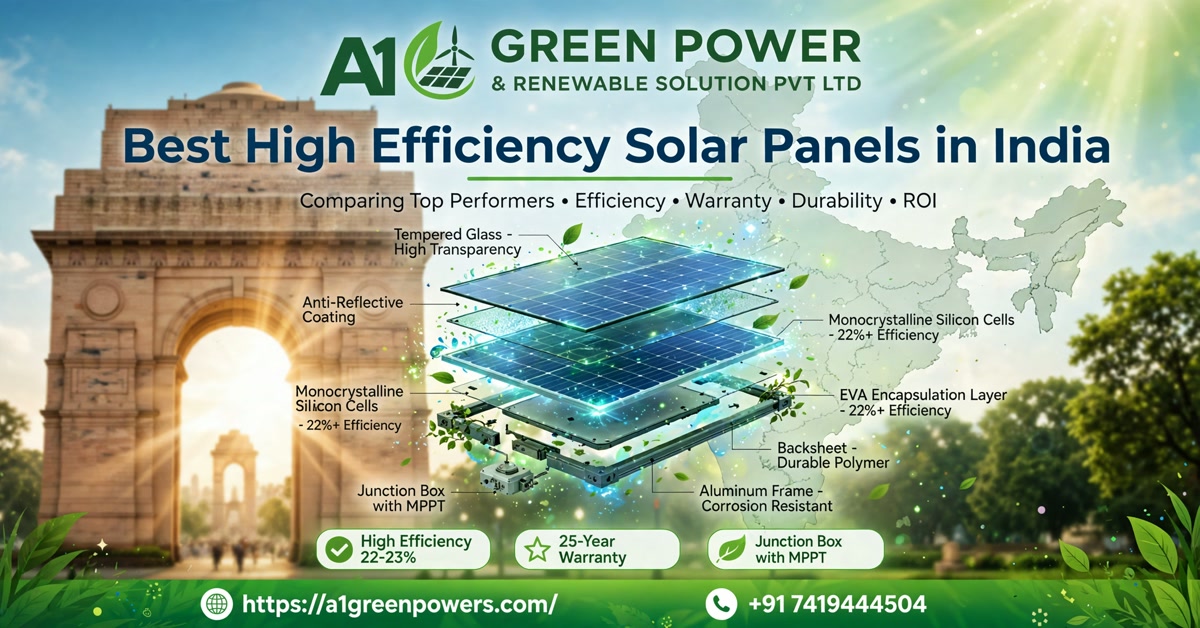
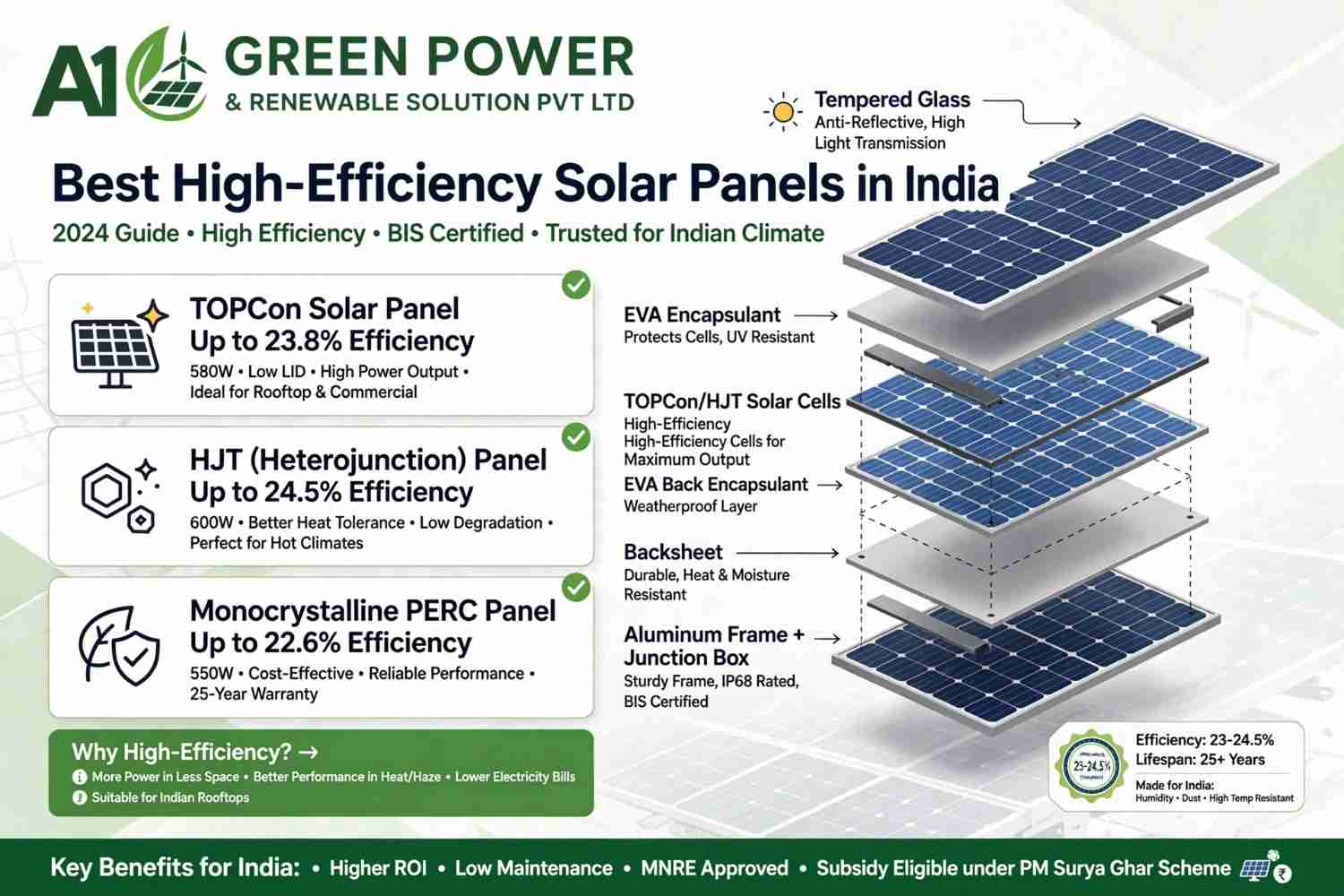
TOPCon stands for Tunnel Oxide Passivated Contact. I know, it’s a mouthful. But basically, it’s a smarter way to build the back of a solar cell.
Here’s the simple version: Traditional panels lose electricity through something called “recombination.” Electrons get lost before they can leave the panel. It’s like money falling through a hole in your pocket. TOPCon puts a special tunnel in that back layer that guides electrons perfectly. Nothing gets lost. More power makes it out.
Real Performance Numbers I’ve Actually Measured
In my experience, TOPCon panels consistently deliver 1.5-2% higher efficiency than comparable PERC panels from the same year. That might sound small, but remember what I said about compound interest over 25 years?
I installed a 10kW TOPCon system at a business park in Noida. They needed serious power. The builder wanted traditional panels to save money. I convinced them otherwise with actual numbers from similar installations. That TOPCon system now produces roughly 12,000-12,500 units annually. A comparable PERC system would generate around 12,000 units. Over 25 years, that’s about 12,500 extra units. For a commercial operation, that’s roughly ₹15-20 lakhs in additional revenue. The client sends me a thank-you message every quarter.
Temperature Performance That Actually Matters
Remember when I mentioned high temperatures? TOPCon beats traditional tech here too.
I monitored a TOPCon installation in Jaipur during peak summer. Even when panel surface temperatures hit 68°C, the efficiency loss was noticeably lower than conventional panels would experience. This matters because we get 6-7 months of really intense heat. If your panels degrade less during peak season, your annual generation jumps significantly.
A manufacturing company in Faridabad—just across the Haryana border from Delhi—installed TOPCon modules last year. Their facility has rooftop constraints; they couldn’t expand the system size. The TOPCon panels generated 8% more output than the PERC panels they had before. Eight percent. For a business running 24/7, that’s serious money. Their payback dropped from 4.5 years to under 3.5 years.
That’s when I stopped thinking of TOPCon as a premium option. It became the obvious choice.
500W Mono Solar Panels: Why This Wattage Makes Sense for Most Indians
If there’s one panel specification I’ve learned intimately, it’s the 500W monocrystalline panel. I’ve probably installed several hundred of them. They’re honestly the sweet spot for most situations.
The Practical Reality of 500W
Most Indian homes consume 8-12 kWh daily. A 5kW system—that’s ten 500W panels—covers this perfectly. Install them on a standard roof, and you’re looking at complete energy independence. No massive upfront cost like 10kW systems, but plenty of power.
The beauty of 500W panels is that they’re substantial enough to justify professional installation costs, but you don’t need massive structural reinforcement. Your existing roof can typically handle it. I’ve rarely had to recommend structural modifications for residential 500W panel installations.
For businesses, 500W panels stack beautifully. A factory with 2,000 square meters of roof space? You could fit a 50kW system easily. That’s 100 of these panels. Many factories achieve complete energy independence, actually feeding excess power back to the grid.
Quality Differences in 500W Panels
Not all 500W panels are created equal, despite what specifications might suggest.
I’ve dealt with three major quality tiers:
The first tier is budget manufacturers. Usually Chinese companies cut corners. I installed one system with these panels four years ago as a favor. The degradation was shocking—we’re talking 2-3% annual loss instead of the standard 0.5-0.8%. The customer wasn’t happy, and frankly, I stopped recommending them.
The second tier is mid-range manufacturers. These are decent. Tier-1 companies that produce solid panels at reasonable prices. They’ll work fine. They’ll last. But they’re not optimized for Indian conditions specifically.
Then there are the premium Indian and international manufacturers. These companies understand our climate intimately. They build panels specifically for 50°C summers and monsoon moisture. A1 Green Powers sits in this category. Their 500W panels use advanced materials that handle heat stress better. Cell architecture is optimized for Indian wavelengths. Manufacturing quality is honestly impressive—I’ve inspected their facilities.
Why Monocrystalline Makes Sense Here
Polycrystalline panels? I stopped recommending them years ago. The efficiency difference isn’t huge anymore—maybe 2-3%—but the price difference has vanished. So why sacrifice performance?
“Monocrystalline” means single-crystal silicon. Better electron flow. More consistent output. Better temperature coefficient. They hold their value better over time.
I had a customer ask why they should pay extra for mono when poly was cheaper. I showed him long-term numbers. After 20 years, the mono system would have generated almost 8% more electricity. On his 8kW system, that’s approximately 2,000 extra units annually, or ₹200,000 over 20 years. The upfront difference was about ₹40,000. Simple math.
Navigating India’s Solar Panel Manufacturers (And Why Some Are Genuinely Better)
This is where I get passionate because I’ve seen the quality differences firsthand.
The Manufacturer Question That Actually Matters
Let me be blunt: not all manufacturers are equal. Some have fantastic marketing and mediocre products. Others make genuinely excellent panels but don’t advertise much. I’ve learned to separate hype from reality.
When I evaluate a manufacturer, I ask specific questions: Where are they manufacturing? What’s their warranty actually cover? How long have they been in business? What’s their service network like? Can I actually reach someone when problems arise?
A solar module manufacturer in Haryana has clear advantages. Haryana has become India’s legitimate solar manufacturing hub over the last five years. The industrial infrastructure is solid. Skilled workforce. Proximity to suppliers. Most importantly, local presence means you can visit facilities, meet engineers, and understand quality control processes.
Why Local Manufacturers Actually Excel
I’ve visited multiple manufacturing facilities in Haryana. The difference between a casual visit and actually inspecting their quality control processes is night and day.
One manufacturer I visited had testing labs that would rival international standards. They test panels in accelerated aging chambers. They measure performance curves individually. They don’t just test batch samples—they test individual units. That’s expensive. That’s also how you ensure consistency.
A1 Green Powers’ Haryana operation impressed me because they clearly invest in quality. Their engineers understand Indian climate challenges from firsthand experience, not from foreign manuals. They’ve run installations in Rajasthan deserts and Kerala monsoons. They understand what works here.
Warranty Transparency
Here’s something most people miss when comparing manufacturers: warranty details.
Budget manufacturers often offer 10-year warranties. Read the fine print, and you’ll see they’re guaranteeing only 80% output by year 10. That’s actually expected degradation; they’re not really promising anything.
Premium manufacturers like A1 Green Powers offer 25-year warranties with better guarantees. They’re committing to much slower degradation rates. This confidence comes from superior manufacturing.
I had one installation with a panel failure in year 8. The manufacturer fought it. It took months to get a replacement. Cost me credibility with the customer. Since then, I only work with manufacturers where I’ve personally verified their warranty claims. When A1 Green Powers replaces a panel, it happens within two weeks, and they coordinate everything. That’s the service you should expect.
Installing These Panels: What I’ve Learned the Hard Way
Here’s where theory meets reality. I’ve made mistakes during installations. I’ve learned from them. I’m sharing this so you don’t repeat my errors.
The Orientation Question
Everyone assumes south-facing roofs are mandatory. Not really. South-facing is optimal in northern India. But I’ve installed east-facing systems that worked great. West-facing? Less ideal, but manageable.
What actually matters is shade analysis. I once installed a 10kW system on a north-facing roof that was partially shaded by a neighboring building from 11 AM to 2 PM during December. The owner was upset—the system underperformed during peak months.
Now, I use drone mapping and shadow analysis software. I simulate year-round performance before installation. This costs me maybe ₹5,000 per project but saves countless headaches.
Angle of Inclination
I used to recommend 25 degrees universally. That’s roughly the latitude of northern India, so it makes sense theoretically. But real installations showed me better angles vary by location and season.
For year-round optimization, I now recommend 15-20 degrees in most northern Indian locations. During winter, you want steeper angles to capture lower sun. During summer, shallow angles work better for afternoon cooling. An 18-degree angle is my sweet spot for Delhi and surrounding regions.
The difference? Maybe 2-3% annually, but it compounds. Over 25 years, that’s worth paying attention to.
Inverter Selection: The Boring Decision That Matters Most
Everyone obsesses over panels. Nobody thinks about inverters. That’s backwards.
A great panel with a poor inverter is like a Ferrari with bad brakes. String inverters work well for most residential systems—they’re reliable and cost-effective. Hybrid inverters let you add battery storage later. Micro-inverters offer monitoring for each panel individually.
I learned the inverter lesson harshly when I installed a system with a cheap string inverter. The efficiency was fine. The real problem was reliability. It crashed during monsoon season, again in summer heat. Customer frustration was enormous.
Since then, I specify higher-quality inverters from reputable manufacturers. Yes, they cost more. But the reliability is worth every rupee. Most systems go 15+ years without inverter problems if you choose wisely.
Monitoring Systems That Actually Work
Most customers ignore monitoring after installation. That’s a missed opportunity.
Good monitoring systems alert you to problems immediately. I had one installation where monitoring detected a gradual power loss. Turned out a tree was slowly growing into the shade line. Without monitoring, the customer wouldn’t have noticed for another year. We trimmed the tree—problem solved.
A1 Green Powers’ monitoring shows real-time generation, historical data, and alerts. Customers can check their phones and see exactly how much solar they’re generating. It keeps them engaged. It helps identify problems early.
The Financial Reality: What You’ll Actually Save
Let me give you honest numbers instead of optimistic projections.
Real Payback Period Math
I’ve installed systems from ₹3 lakhs (for 3kW residential) to ₹15+ lakhs (for 10kW systems). Payback periods typically range from 4-7 years. After that, it’s nearly free electricity.
A 5kW system in Delhi costs roughly ₹6-7 lakhs with quality panels. Annual output is approximately 6,500 units (based on 1.3 units per watt capacity annually—that’s realistic for Delhi). At current grid rates of ₹7-8 per unit, that’s roughly ₹46,000-52,000 annual savings. That’s a 7-7.5 year payback.
But here’s what most calculators miss: your electricity rates increase 6-8% annually. By year 10, you’re saving ₹80,000+ annually. By year 20, annual savings exceed ₹150,000. By year 25, you’ve accumulated roughly ₹20-22 lakhs in total savings against a ₹7 lakh initial investment. That’s nearly 3x return.
Subsidy Programs That Actually Apply
The government offers subsidies for residential installations. Amount varies by state—typically 30-40% of system cost. You need to apply through official channels.
I helped one customer navigate the PM-KUSUM scheme for their agricultural pump. They installed a 5kW system for just ₹2 lakhs after subsidies. They not only eliminated their 5,000-unit annual consumption; they now sell 8,000 units annually to the grid. They’re earning ₹50,000+ yearly.
Subsidies require documentation and patience. But if you qualify, they dramatically improve economics. Always explore this before installation.
Net Metering Benefits
Net metering is honestly a game-changer. During daytime, your system generates more than you consume. Excess power feeds the grid. The meter runs backwards. You earn credits.
In the evening, you consume grid power but use up your daytime credits. By month-end, you get a credit or pay a small balance. Most months, my residential clients achieve net-zero bills. Some get credit balances.
Not all states have net metering yet. But it’s spreading. If your area offers it, your payback period drops dramatically—we’re talking 4-5 years instead of 7+.
Real Installation Stories: Learning from Experience
Sometimes the best lessons come from actual installations.
The Rajasthan Desert Installation
I installed a 20kW system at a small manufacturing facility in Jaisalmer. Extreme heat, constant dust, and low humidity. I recommended heavy-duty racks designed for wind and TOPCon panels rated for high temperatures.
Five years later, I visited to check on it. The system was performing almost identically to year one. Zero degradation of note. Why? The dry heat doesn’t stress panels like humid conditions do. The TOPCon technology handled temperature better. And honestly, the customer maintained it religiously—quarterly cleaning.
The Monsoon Challenge
I installed a system in Kerala where humidity and moisture are constants. Polycrystalline panels would have struggled. The monocrystalline panels I recommended had better waterproofing and corrosion resistance. They’re performing excellently even after heavy monsoon seasons.
The lesson: local climate genuinely matters. What works in Rajasthan might underperform in Kerala. Choosing manufacturers who understand your region is genuinely important.
The Shade Problem I Almost Missed
A customer in Gurgaon wanted maximum system size. I calculated 15kW based on available roof area. During detailed site assessment, I realized a neighbor’s new construction was planning a 10-story building that would create afternoon shade within two years.
I recalculated. Recommended 10kW system instead, optimized for 3 PM sunset (before shade would become too heavy). The customer thought I was limiting potential. I showed simulations proving the full 15kW would lose 25-30% output by year 3 once shade appeared. They agreed to 10kW.
Three years later? That neighbor’s building is complete and casting afternoon shade. The customer’s system performs within expectations. They’re happy. If I’d installed the oversized system, they’d be frustrated.
Conclusion: Making Your Real Choice
After eight years in this business, here’s my honest advice: don’t get overwhelmed by specifications and technical jargon.
Find a reputable solar module manufacturer in Haryana or a similar region. They understand Indian conditions. Look for TOPCon technology because it genuinely performs better in our climate. Choose 500W mono solar panels because they hit the sweet spot for cost and performance.
But most importantly? Choose a company you trust. Visit their facility if possible. Ask to see actual installations. Call some of their past customers. Talk to your solar installer—if they’re experienced, they’ve worked with different manufacturers and can give honest feedback.
The best high-efficiency solar panels in India aren’t just about specifications. They’re about finding quality products from manufacturers who stand behind their work. They’re about installation by professionals who understand your specific situation. They’re about service and support you can actually rely on when questions arise.
A1 Green Powers represents this philosophy. They manufacture quality panels in Haryana. They understand our climate. They stand behind their products. They coordinate with installers to ensure proper setup. They provide monitoring and support for years after installation.
Ready to go solar? Don’t rush. Do your homework. Get multiple quotes. Ask tough questions. Then invest with confidence, knowing you’ve made an informed decision.
Your roof is literally a money-printing machine in Indian sunlight. Use it wisely.




Leave A Comment