

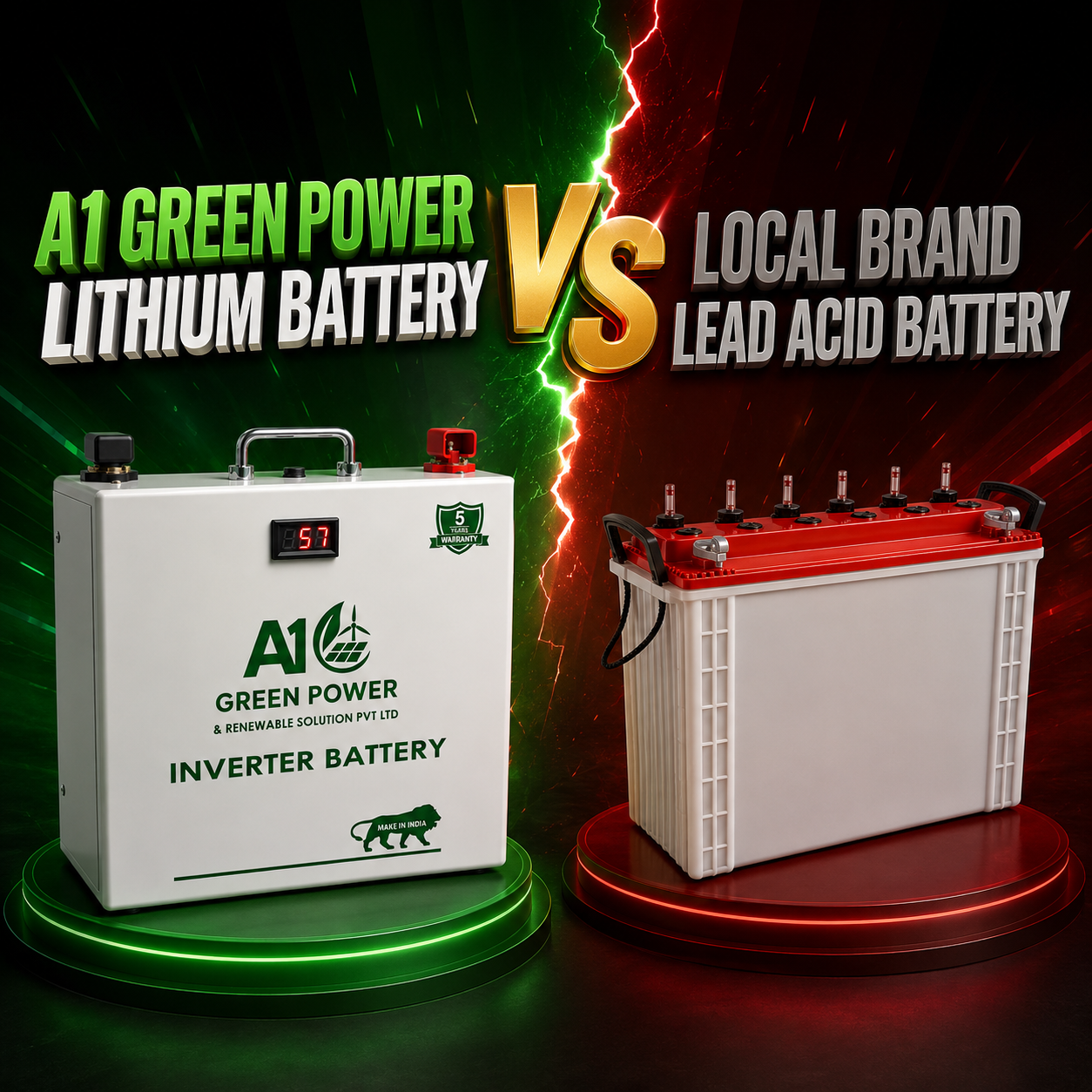
Lithium Battery vs Lead-Acid Battery: Which Is Better for Inverters & Solar Systems?
When you pick a battery for a home inverter a hybrid inverter or a solar power system the choice you will face is picking the best battery technology.
Two common options are lithium batteries and lead acid batteries.
Which battery is better? Which battery will serve you best?
The answer depends on factors such as battery life charging speed, efficiency, maintenance, usable capacity, installation needs and upfront cost.
In this guide I will compare lithium batteries versus acid batteries in detail so you can make a more informed decision, for your home, office, commercial setup or solar energy system.
What Is a Lithium Battery?
A lithium battery is a type of battery that uses lithium-based chemistry to store and release electrical energy.
For inverter and solar applications, Lithium Iron Phosphate (LiFePO₄) is a commonly used chemistry because it combines safety, cycle life, stability and performance.
Lithium batteries are increasingly being used in:
- Home inverter systems
- Solar energy storage
- Hybrid inverter systems
- Electric vehicles
- Commercial energy storage
- Backup power systems
- Telecom applications
Modern lithium batteries can also have a Battery Management System or BMS that keeps track of things, like voltage levels, temperature, how the battery charges, how it discharges and safety protection. This system helps make sure the battery works well and stays safe.
What Is a Lead Acid Battery?
A lead acid battery is one of the most widely used rechargeable battery technologies across India and all over the world. These batteries store energy using lead plates and an electrolyte solution.
Common types include:
- Flooded lead acid batteries
- Tubular batteries
- AGM batteries
- Gel batteries
Lead acid batteries have been a go-to choice for inverters and backup power systems, for a time. They are easy to find, well known by people. Usually cost less when you first buy them compared to lithium batteries.
Lithium Battery vs Lead Acid Battery: Key Differences
1. Battery Life
One of the advantages of lithium batteries is their long cycle life.
A batterys life is not determined by how many years it sits on a shelf. For batteries the number of charge-discharge cycles and the depth of those cycles are important factors.
Lithium batteries, LiFePO₄ batteries can generally provide significantly more cycles, than regular lead acid batteries when operated within their recommended limits.
Winner: Lithium Battery : If you are looking for a battery designed for frequent cycling, lithium batteries can be a strong choice.
2. Charging Speed
Charging speed is a difference.
Lithium batteries can handle charging currents and can recharge faster when used with a suitable charger or inverter.
Lead acid batteries usually need charging time especially as they, near full charge.
In systems faster charging is useful because solar energy can change during the day.
Winner: Lithium Battery
3. Energy Efficiency
A battery does not give back all the energy that it stores as power.
During charging and discharging some energy disappears.
Lithium batteries usually give back energy than normal lead‑acid batteries.
This matters a lot when we use power because we want to use the electricity produced by solar panels as well, as possible.
Winner: Lithium Battery
4. Usable Battery Capacity
Battery capacity is often written in Ah. Looking at Ah numbers alone does not give the full picture.
How power we can actually use depends on how far the battery is allowed to be drained.
Lead‑acid batteries tend to work when they are not drained too deep over and over while lithium batteries can usually handle a deeper drain if we stay inside the limits set by the maker.
Because of this a lithium battery that has the nominal capacity can give us more usable energy in practice.
Winner: Lithium Battery
5. Maintenance Requirements
Old flooded lead‑acid batteries often need care.
Depending on the type that care may mean:
- Checking electrolyte levels
- Adding distilled water
- Cleaning terminals
- Ensuring proper ventilation
- Monitoring battery condition
New sealed lead‑acid batteries cut down on many of these chores.
Lithium batteries usually need less routine work. A well‑planned lithium system can use its BMS to watch over and guard the battery by itself.
Winner: Lithium Battery
6. Weight and Size
Lead acid batteries are relatively heavy because of their construction and the amount of lead used in them .
Lithium batteries can deliver comparable usable energy with a significantly lower weight and more compact form factor, depending on the specific battery.
This can make lithium batteries more useful and attractive when:
- Space is limited
- The battery needs to be moved to another place
- A clean installation & low maintenance is preferred
- Higher density of energy is required
Winner: Lithium Battery
7. Safety
The safety of the battery depends to a large extent on the chemistry of the battery, battery design, charging system, installation, and protection mechanisms.
Modern LiFePO₄ batteries are characterized by high thermal and chemical stability compared with some other lithium battery chemistries.
A good lithium battery must have the appropriate protection using a Battery Management System (BMS).
Lead acid batteries have their own set of safety concerns that include gas generation (hydrogen gas) in some designs during charge and acid exposure and require proper ventilation.
Important:
Regardless of battery technology, always use a battery compatible with the inverter/charger and follow the manufacturer’s installation and operating instructions.
8. Upfront Cost
This is where the lead acid batteries are often advantageous
A lead acid type might well have a significantly lower purchase price than a lithium battery of the same capacity.
But the initial purchase price is only one component of the overall cost.
You should also consider:
- Battery replacement frequency
- Electricity losses
- Maintenance
- Installation
- Usable capacity
- Cycle life
- Long-term performance
This is why lithium batteries can sometimes provide better long-term value, even when their initial price is higher.
Winner for upfront cost: Lead Acid
Winner for long-term value: Lithium, depending on usage
Lithium Battery vs Lead Acid Battery for Solar Systems
Solar energy systems generate electricity during daylight hours, but homes and businesses may need power throughout the day and night too.
A battery allows excess solar energy to be stored and used later.
Lithium batteries are particularly suitable for solar storage because they offer:
- High efficiency
- Fast charging
- High usable capacity
- Long cycle life
- Low maintenance
- Compact installation
Lead acid batteries can also be used with solar systems and remain a practical option for users who prioritize a lower initial investment.
However, for systems with frequent daily cycling, lithium technology can offer significant advantages and better valus
Lithium Battery vs Lead Acid Battery for Inverters
For a typical home inverter, the right battery depends on user’s power requirements and usage pattern.
Choose Lithium Battery if you want:
- Longer battery life
- Fast charging
- Low maintenance
- Better energy efficiency
- Compact installation
- High usable capacity
- Frequent charging and discharging
Choose Lead Acid Battery if you want:
- Lower initial investment
- A widely available technology
- A familiar inverter battery solution
- A system where the battery is not cycled heavily
The inverter and battery should always be compatible. Lithium batteries may require specific communication protocols or charging profiles depending on the inverter and battery model.
Lithium Battery vs Lead Acid Battery: Which One Should You Buy?
There is no single battery that is perfect for every user and their use case .
Your choice should depend on how you use your inverter or solar system.
For occasional backup power
Lead acid may make sense if your primary goal is keeping the initial purchase cost low.
For daily solar usage
Lithium is often a more attractive option because of its higher efficiency, deeper usable capacity, and longer cycle life.
For commercial applications
Lithium can be beneficial where battery cycling is frequent and downtime or maintenance needs to be less.
For space-constrained installations
Lithium’s compact and lightweight design can be a significant advantage.
Is a Lithium Battery Worth the Higher Price?
This is one of the most common questions every customer ask.
The answer depends on your usage.
If you only need occasional backup power and have a limited initial budget, a lead acid battery may be sufficient and good for you.
But if you use your battery regularly, particularly with a solar or hybrid inverter system, in this case lithium will be more beneficial for you over the time through:
- Long service life
- High efficiency
- Low maintenance
- Great usable energy
- Fast charging
- Better cycling performance
Therefore, instead of comparing only the price, consider the total cost of ownership over the expected operating period.
How to Choose the Right Inverter Battery?
Before considering a Lithium or Lead Acid Battery, consider these factors:
1. Power Requirement
Determine which appliances you need to run during a power cut.
2. Backup Duration
Estimate how many total hours of backup you need throughout he day.
3. Daily Usage
If you frequently charge and discharge the battery, cycle life becomes very important factor.
4. Solar Integration
If you are installing solar panels, make sure the battery and inverter are compatible with each other or not !
5. Available Space
Consider the battery’s dimensions and weight according to the available space.
6. Maintenance
If you want a low-maintenance system, lithium can be useful option for you.
7. Budget
Compare both initial cost and long-term operating cost.
8. Inverter Compatibility
This is extremely important. Check the inverter manufacturer’s specifications before selecting a lithium battery or lead acid battery.
A1 Green Power & Renewable Solutions: Smarter Energy Storage Solutions
At A1 Green Powers we are dedicated to bringing you the most modern power and backup solutions.
Our product portfolio offers lithium batteries, hybrid inverters and solar products for residential, commercial and other applications.
Whether you have an existing inverter system and want to upgrade or are looking for a complete solar solution, finding the right solution that combines your solar panels with the appropriate inverter and battery is key to maximizing performance.
Frequently Asked Questions (FAQs)
Is lithium battery better than lead acid battery?
When it comes to solar and inverter batteries, lithium batteries provide benefits in respect to cycle life, efficiency, quick charging, usable capacity, and much lesser weight. However, lead acid batteries are often preferred by people who want to minimize the initial costs.
Which battery lasts longer lithium or lead acid?
Lithium batteries have a higher cycle life as compared to conventional lead acid batteries, but the duration also depends on the type of battery, usage, and other factors such as temperature, charge, and maintenance.
Is lithium battery good for solar panels?
Yes, lithium batteries are often the preferred choice when it comes to storing energy from solar panels. It has a high efficiency rate and provides a good amount of usable storage.
Which is cheaper lithium or lead acid?
Lead acid batteries have a lower upfront cost as compared to lithium batteries. However, lithium batteries have a longer lifespan and provide better performance.
Which battery requires less maintenance?
Lithium batteries require much lesser maintenance as compared to lead acid batteries.
Can I replace my lead acid battery with lithium battery?
While it is possible to replace a lead acid battery with a lithium battery, it is important to ensure that the inverter/charger is compatible with the lithium battery.
Are lithium batteries safe for home use?
Good quality lithium batteries which have the suitable chemistry, protections, and installation methods can be ideal for home use. It is important to make sure that all the specifications are met as mentioned by the manufacturer.









Leave A Comment